Design the way you work together. Before it designs you.
When an artificial intelligence (AI) agent takes on part of a job, the change reaches beyond the task. It also affects who makes decisions, how people learn and what gives their work purpose. An AI agent is a computer helper that can take steps on a task.
Buying the tool does not settle those choices. People still need to decide how they will work with it.
That working relationship is the Human-AI Interface. At AIx, we examine how to design it deliberately, so people can shape the work they want to do together.
By Mathias · AIx
Request the Human-AI Interface Paper
The Human-AI Interface Paper explores how people and AI agents can share work while keeping human judgement, learning and responsibility in view.
Request the paper to examine the choices that shape this working relationship, from who makes the final decision to how people question the agent’s work.
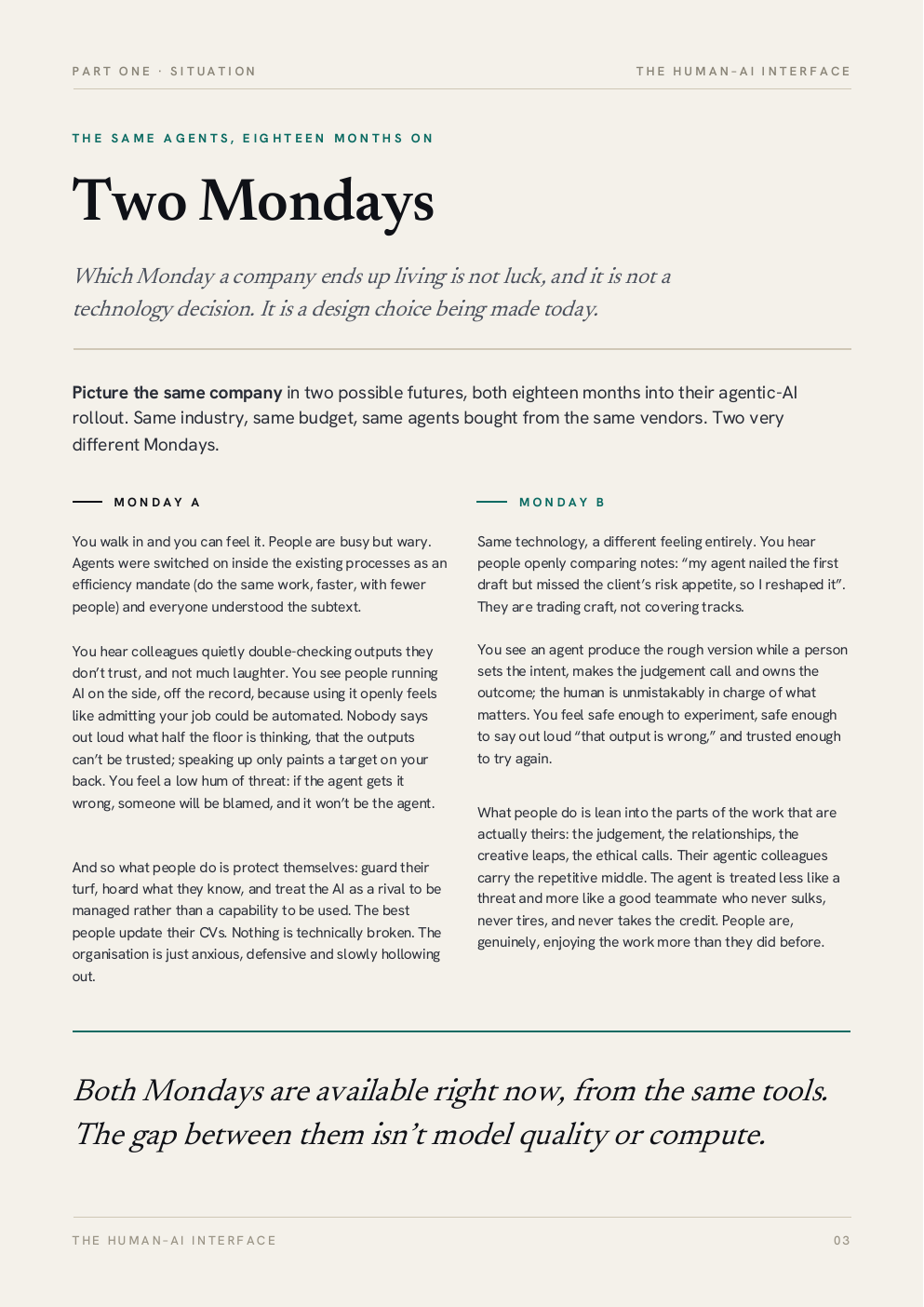
What could two Mondays with the same tools look like?
Imagine two workplaces using the same agents. In one, people protect their jobs and hide how they work. In the other, they question the agents openly and share what they learn. These scenes illustrate the model; they are not accounts of AIx client results.
Monday A
The tools work, but people are wary.
Agents were introduced to get the same work done faster with fewer people. Staff understood what that could mean for their jobs.
People quietly check work they do not trust. Some use AI without telling their managers, while others stay silent about mistakes because they expect to carry the blame. Protecting a role starts to matter more than sharing an idea.
The software is working, but people are unsure whether they can question it or where they belong alongside it.
Does any part of this scene feel familiar?
Monday B
People question the work and learn together.
An agent prepares a draft while a person sets the goal, questions the result and decides what to use. Colleagues compare what worked and what they changed.
People can say that an answer is wrong without fear of blame. Agents handle repeated steps, while staff practise the judgement, creativity and relationship skills their work needs.
The agent has a clear role as a colleague whose work people challenge and improve. The person remains responsible for the result.
What would your team need to work this way?
What are we really designing?
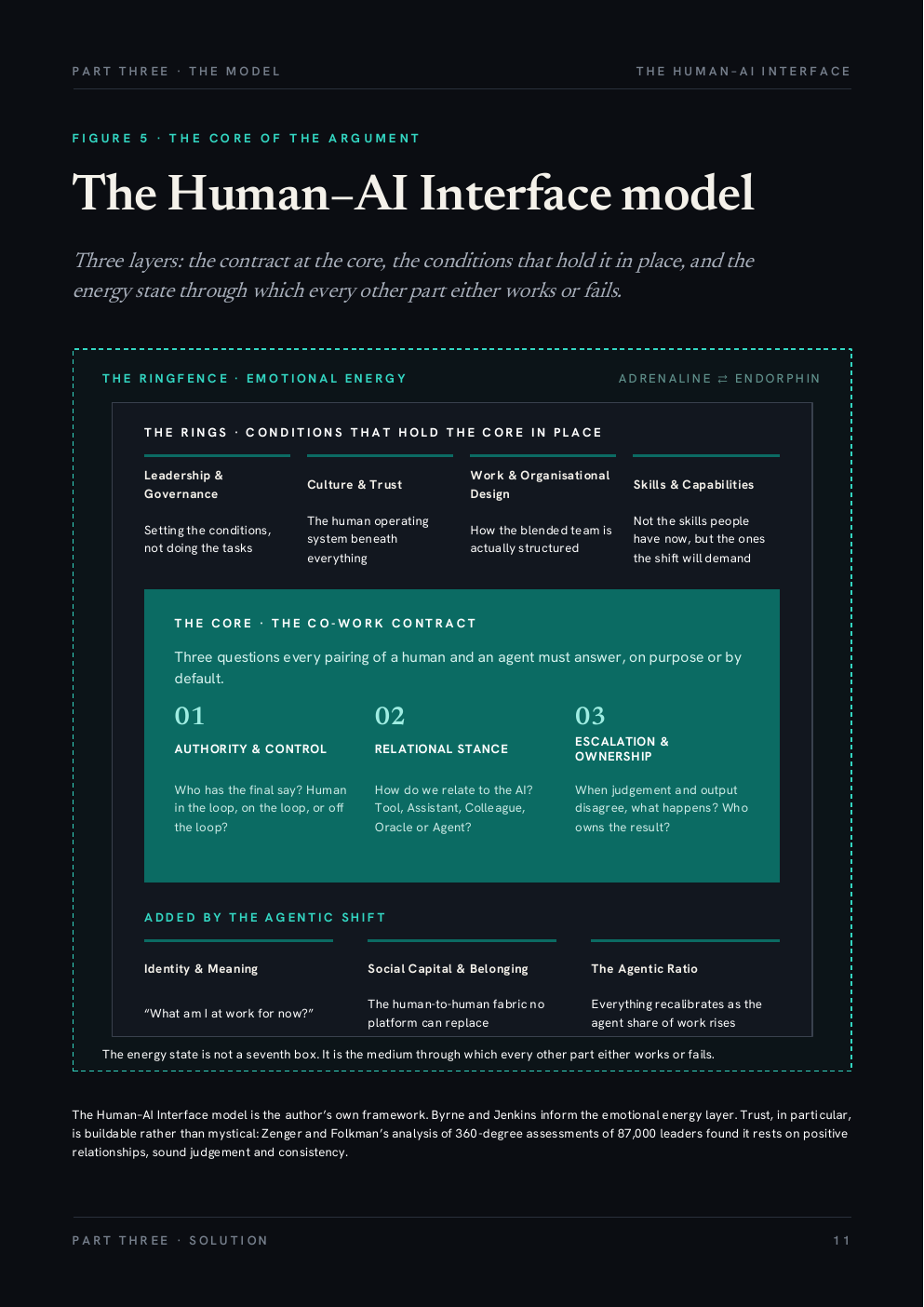
We developed the Human-AI Interface model to connect decisions about AI with the people who live with them.
Who checks the work matters. So does whether staff feel able to challenge it, whether they still take pride in their contribution and whether newer colleagues have a chance to learn.
Our argument is that these questions belong in the same design. At AIx, that means starting with the work people want to achieve, then considering the decisions, relationships and the support it requires.
How do the parts fit together?
The model starts with an agreement about shared work: who has the final say, how people relate to the agent, and what happens when they disagree or something goes wrong.
That agreement needs support from leadership, workplace culture, work design and people’s skills. It also needs to account for purpose, belonging and how much work agents take on.
The model calls the wider working environment its emotional energy layer: whether people work with fear and blame or feel able to question, learn and trust one another. It connects how people feel with how the working agreement holds up in practice.
What are you noticing?
Choose a situation you recognise to explore the part of the model it relates to. You will find a possible explanation and a question to discuss with your team. This is a starting point for enquiry, not an assessment of your organisation.
People use agents in secret while approved tools sit unused.
People need to know whether they can use AI openly, question its work and admit a mistake. If they expect blame, they may keep both their AI use and their doubts to themselves.
Can a junior staff member point out an error in the agent’s work without fear of blame?
Work that looks convincing passes review despite errors.
Teaching people to give an agent instructions is only part of the job. They also need to judge whether its work is sound, even when the answer looks polished.
The model places human development alongside tool skills: judgement, creativity and understanding other people all need practice as the work changes.
Who in your team can tell a convincing answer from a correct one?
Staff lose interest in their work or start looking for another job.
A job gives people more than tasks. It can give them pride, a place in a team and something they want to become good at.
When an agent takes over that work, involve the people affected in shaping what comes next. A new list of duties may not answer what their contribution now means.
For the role that changes most, what will the person contribute and take pride in doing well?
Targets are met, but staff still feel anxious and wary.
Meeting targets does not tell you whether people feel able to raise concerns, try an idea or ask for help.
The model asks how fear, urgency and blame shape the work, and what changes when people have purpose, curiosity and trust. Monday A and Monday B make that difference visible.
What happens in your team when someone admits a mistake?
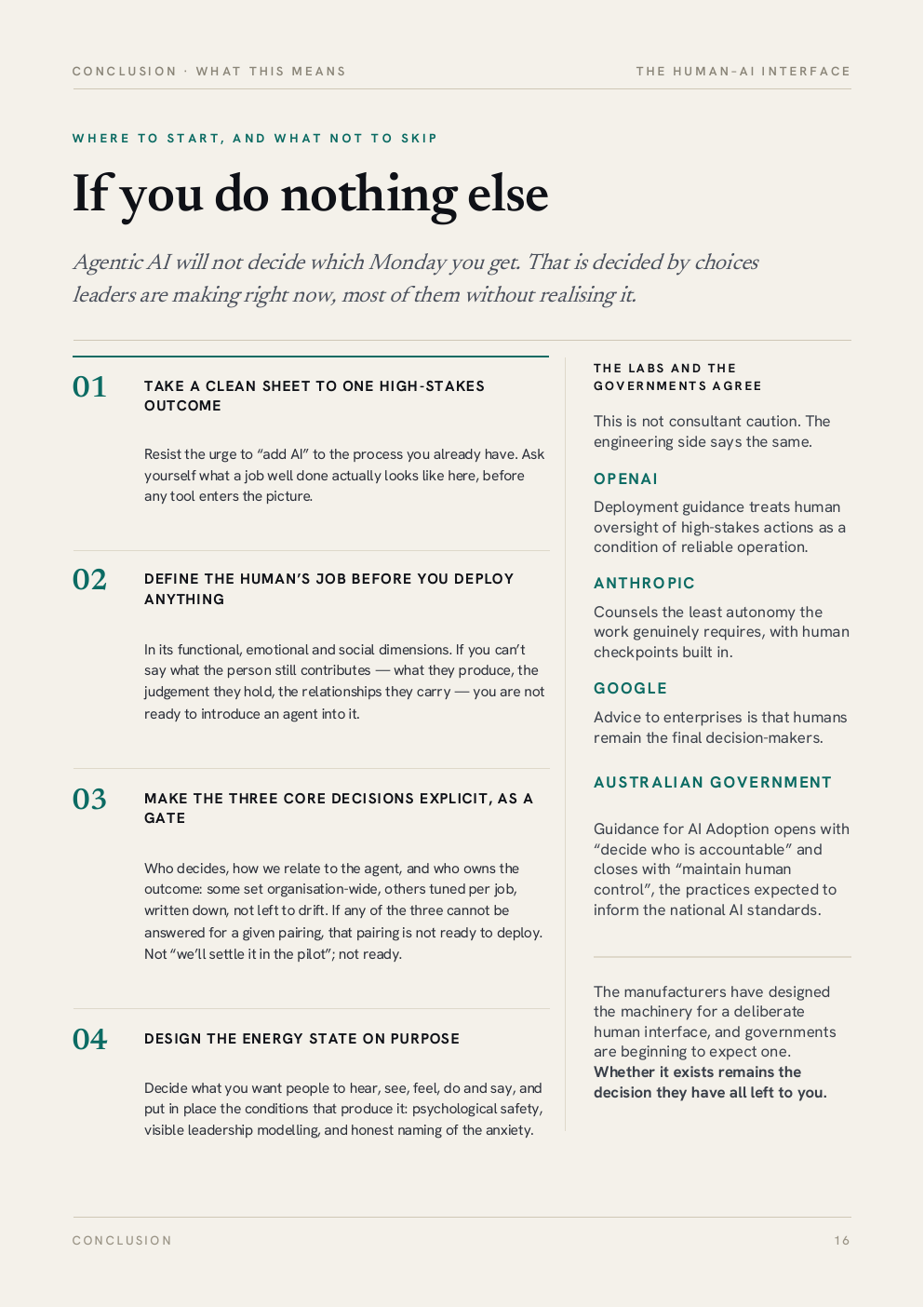
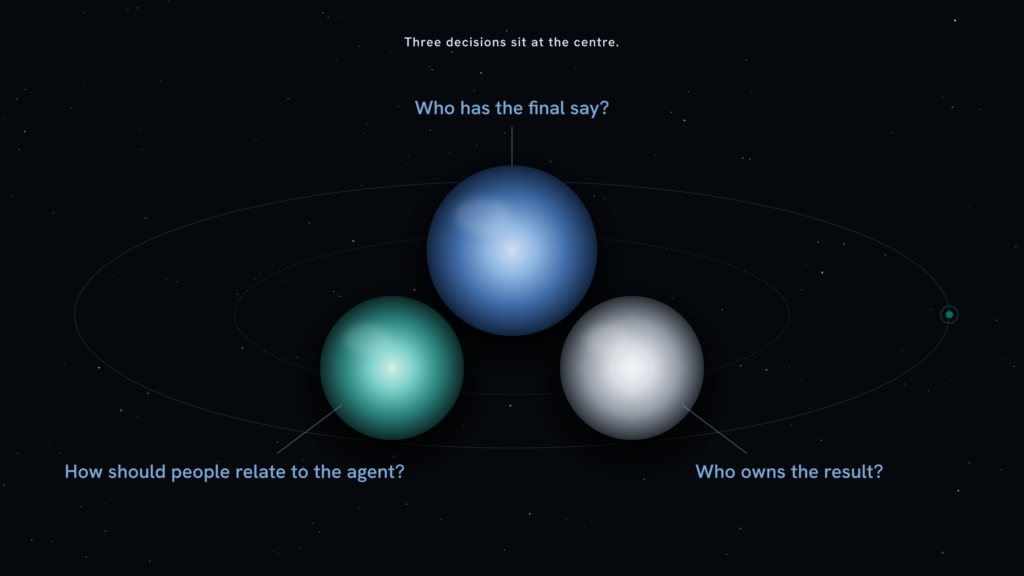
Four questions before the next AI project
Discuss these questions with the people who will do the work and those responsible for it. Start with an answer you have not yet agreed on.
Who has the final say?
Decide who can approve, stop or change the agent’s work.
How will people work with the agent?
Will they operate it as a tool, direct it as an assistant or work with it as a colleague? Match the relationship to what the agent can actually do.
What happens when you disagree?
Agree what happens next and who to contact if the agent’s work is wrong.
Who owns the outcome?
Name the person responsible for the result and for putting mistakes right.
If an answer is unclear, settle it before people rely on the agent’s work.
Who needs to design this relationship?
If you are responsible for how staff and AI agents work together, these choices are part of your work.
For councils and public-sector teams, that includes who makes a decision, how staff raise concerns and who remains answerable to the people affected. Business leaders face related questions about their teams, customers and the quality of the work.
The paper offers a way to consider those choices together, including what people need to learn and how their roles may change.
If you are not sure where or how to start, feel free to schedule a call with us to discuss your needs. A short workshop may also be a useful first step, and you can visit the AIx workshops page to explore the options.
Explore the argument behind the model
The paper develops the ideas introduced here: why adding agents changes more than the process, how to agree on shared work, and what people need as their roles change.
In the paper, Mathias brings these questions together in the Human-AI Interface model. The paper explains the approach through illustrative scenes; it does not report measured AIx client results.
Use the request form to ask for a copy. We may also send relevant follow-up emails, and you can unsubscribe at any time.